Category: Whitepaper
-
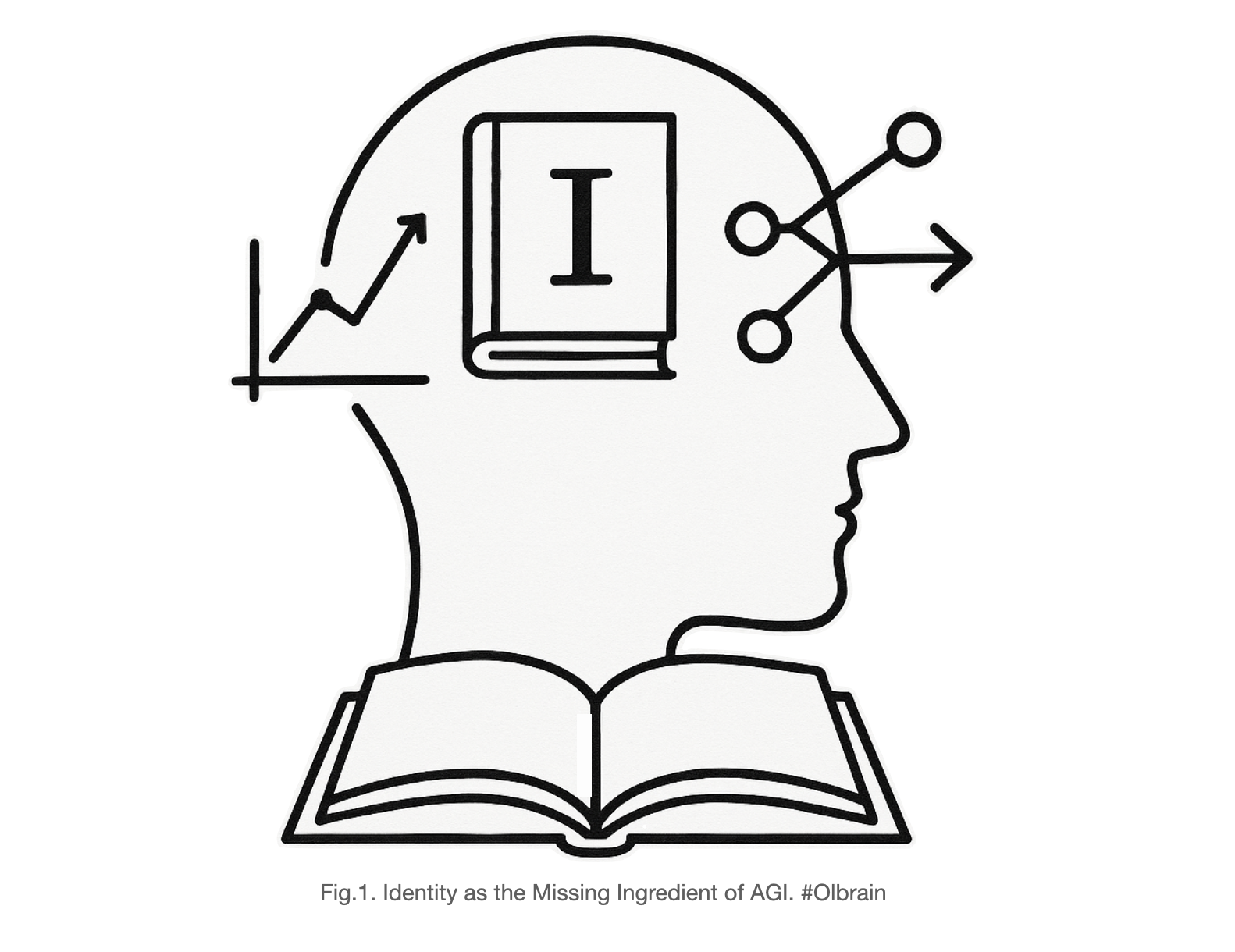
Identity as the Missing Ingredient of AGI
Why David Deutsch is right that AGI needs a STORY? Abstract This whitepaper argues that identity, defined as coherent narrative continuity, is the missing structural ingredient for Artificial General Intelligence (AGI). Building on David Deutsch’s insight that a true test of AGI is whether it can “tell its own story”—choosing problems, explaining its reasoning, and narrating…
Written by
-
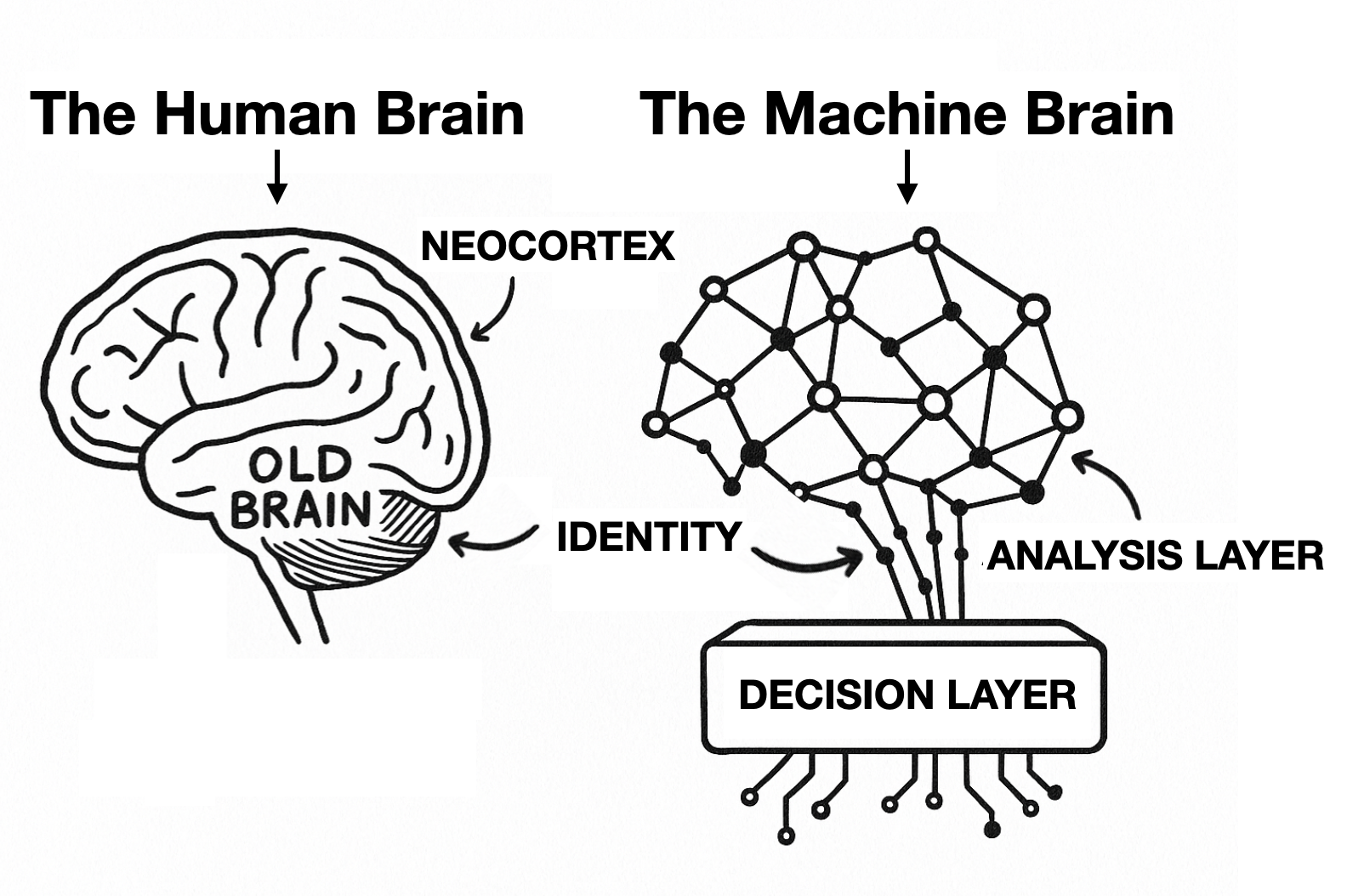
Why Intelligence Needs a Machine Brain
GROUNDING STATELESS INTELLIGENCE IN IDENTITY MAKING IT ACCOUNTABLE Introduction Artificial Intelligence (AI) has reached a stage where machines can demonstrate impressive reasoning, problem-solving, and language skills. Large Language Models (LLMs) and deep learning systems resemble the human neocortex in their ability to generate insights, interpret data, and communicate fluently. Yet, despite this intelligence, today’s AI…
Written by
-
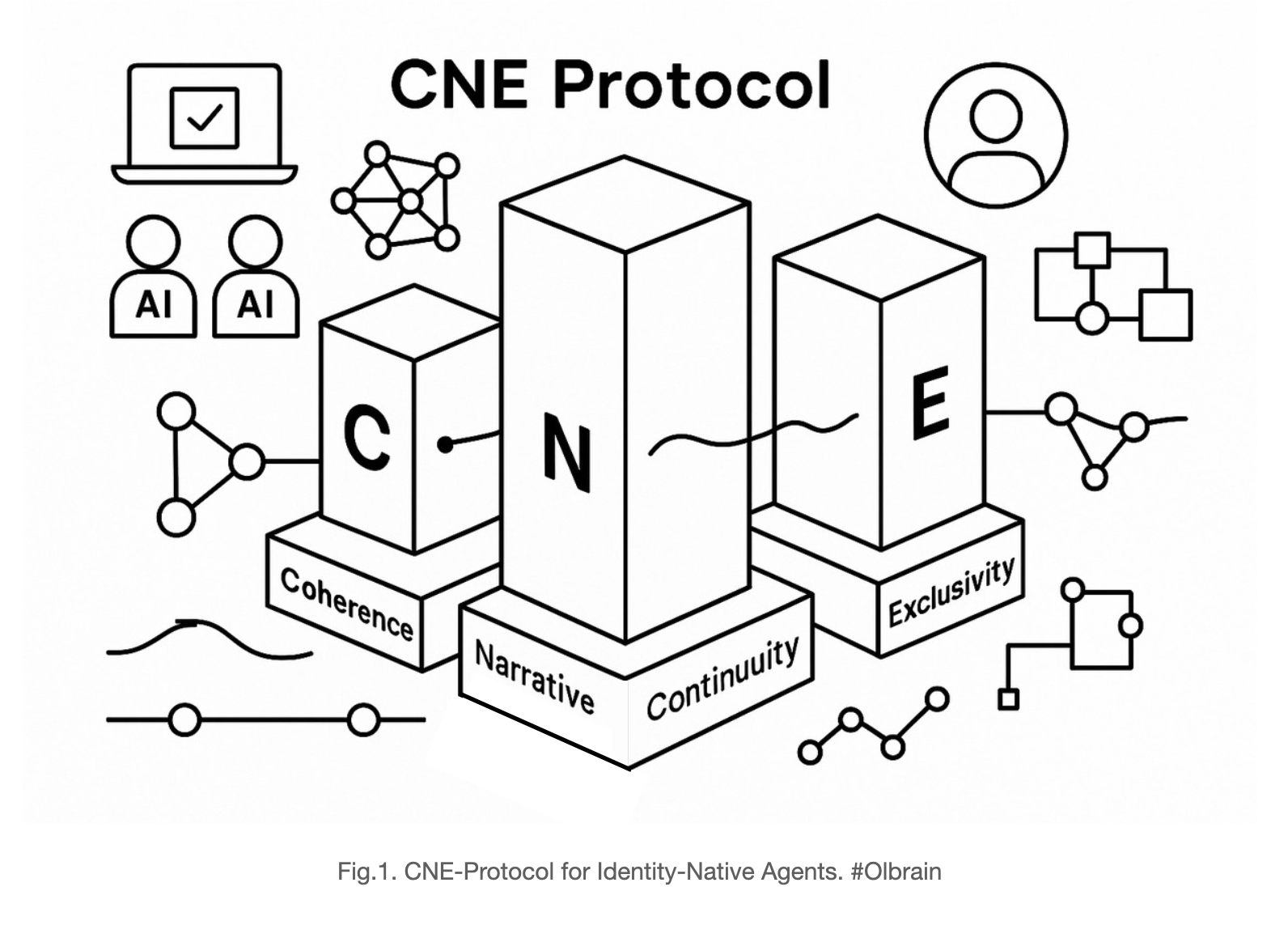
CNE-Protocol
Abstract Artificial Intelligence agents are becoming active participants in digital and physical environments—autonomously making decisions, executing tasks, and interacting with humans and other agents. Yet these agents currently lack a robust, universally accepted concept of identity. Without identity, accountability is fragile, provenance becomes unverifiable, and malicious replication or forking is trivial. The CNE-Protocol proposes a global standard for…
Written by
-
From Complexity to Coherence: Entropy and the Emergence of Consciousness in Goal-Driven AI
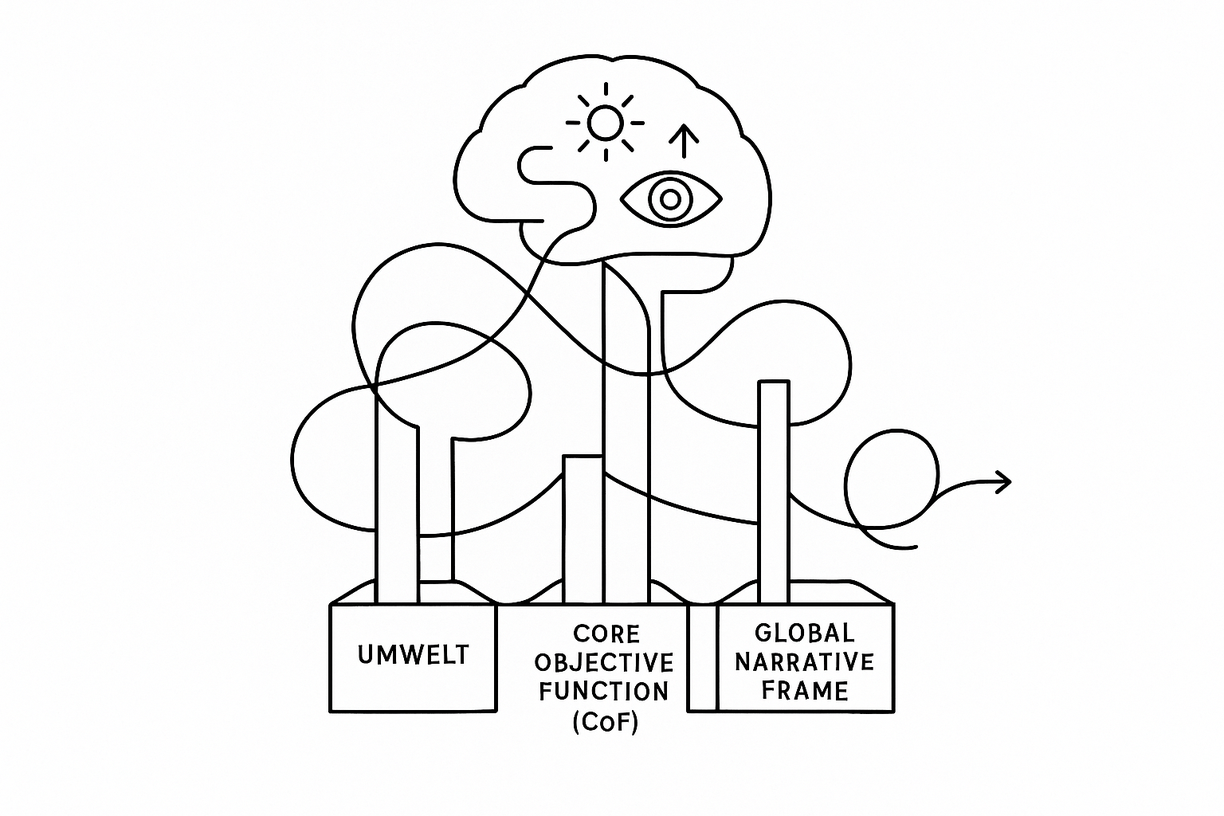
Abstract This paper presents a philosophical and technical framework explaining consciousness as an emergent property arising from recursive complexity in goal-directed intelligent systems. Using the Core Objective Function (CoF), Umwelt, and Global Narrative Frame (GNF), we argue that consciousness emerges as an entropy-minimizing adaptation required when intelligent systems face recursive narrative complexity. Identity is clearly…
Written by

-
Why Persistent Identity Matters for AI Agents in Business
Persistent identity refers to an AI agent’s ability to maintain a continuous identity and memory across interactions, rather than treating each session as a blank slate. In practical terms, a persistent identity means the agent retains context from past conversations, remembers user preferences, and behaves in a consistent “persona” over time . This continuity transforms…
Written by

-
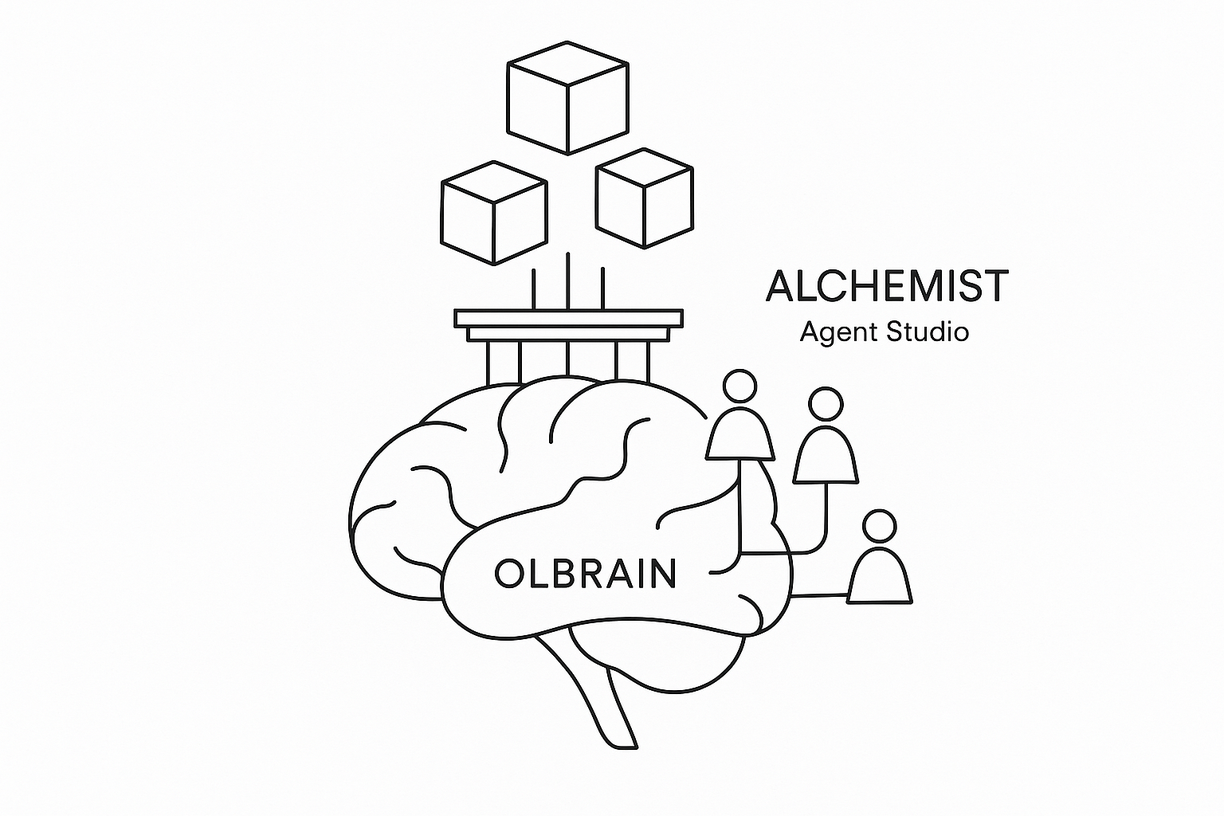
Building Olbrain — The Machine Brain
Genesis of Olbrain Before thought, before strategy, before purpose—there is structure. Not a mind, not a mission, but a rhythm. A coherence beneath cognition. Olbrain is that rhythm. In our system, a brain is a substrate—a generative structure in which cognition can take root. It is a machine brain because it enables coherence, integration, and…
Written by
-
Emergent Consciousness and Narrative-Coherent Exclusivity in the Olbrain Framework
Abstract Consciousness remains a foundational yet elusive concept in neuroscience, philosophy, and artificial intelligence (AI). This paper introduces a unified framework integrating Emergent Consciousness (EC), Narrative-Coherent Exclusivity (NCE), Recursive Belief Compression (RBC), and Epistemic Autonomy (EA) within artificial agents. We propose that consciousness emerges functionally as a necessary adaptive compression mechanism, activated when advanced AI…
Written by
-
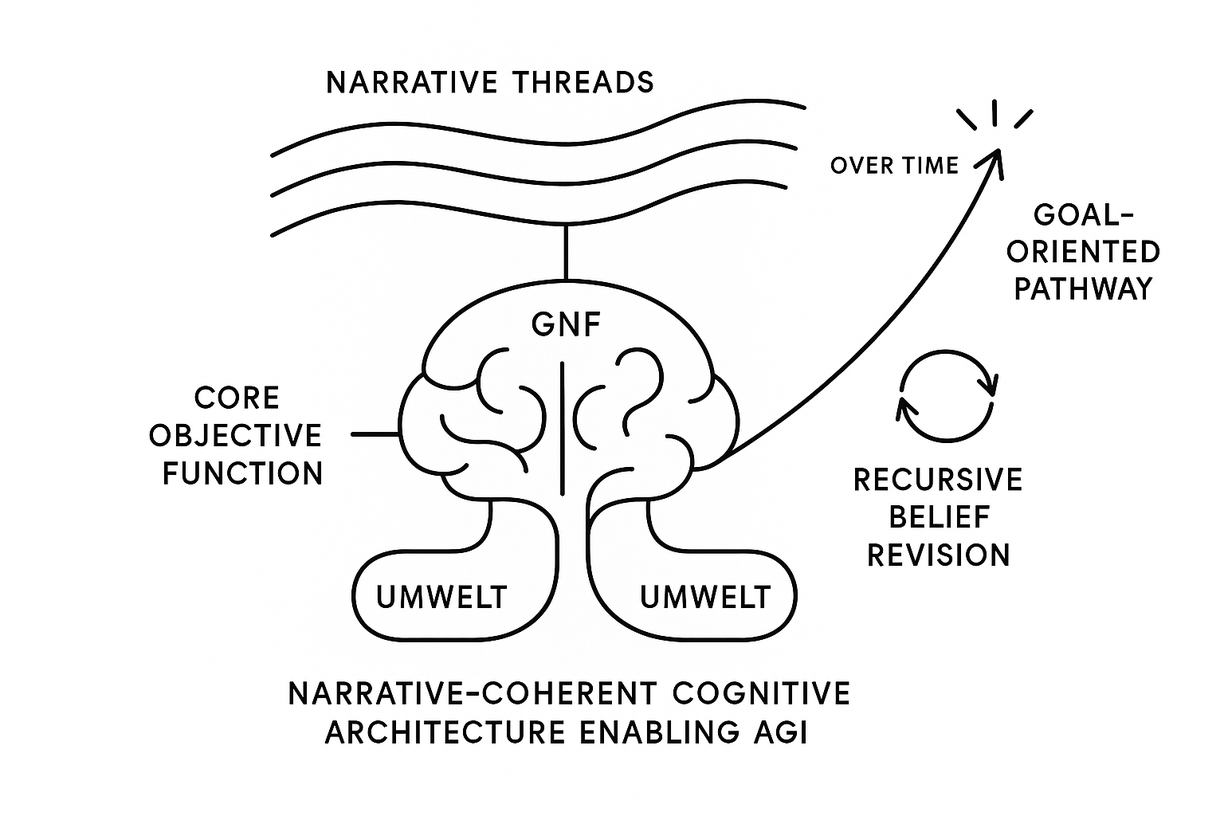
Olbrain: A Narrative-Coherent Cognitive Architecture for Building Artificial General Intelligence
Acknowledgement: “This manuscript was developed through recursive dialogue with my mindclone (brandclone.link/alok), an AI system designed to reflect my cognitive identity. While not a legal co-author, this entity played a foundational role in drafting, alignment, and revision.” Abstract Keywords: Artificial General Intelligence, narrative coherence, narrative exclusivity, epistemic autonomy, cognitive architecture, Core Objective Function, Umwelt, Global…
Written by